

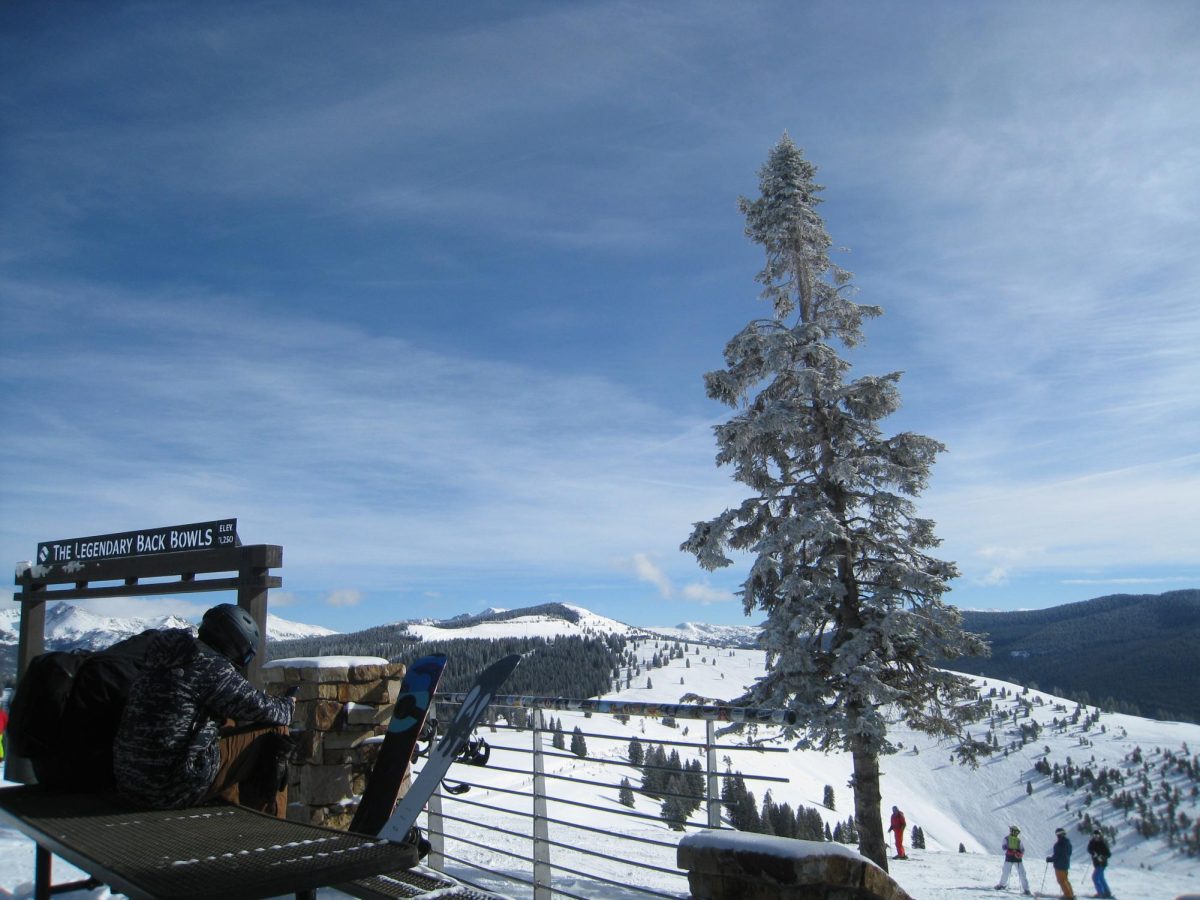
The American West is home to a multitude of unique environmental landscapes and landforms. From the Grand Canyon to Yosemite National Park, or from the Mojave Desert to Yellowstone, the West is full of invigorating life. One of the most prominent aspects of the west, though, is the bountiful mountain ranges and the wintry weather they experience.
These ranges, including the Rocky Mountains and Cascade Range, often experience hundreds of inches of snow each year. Along with this, optimal temperatures and wind patterns help to create deep, consistent snowpacks in the mountains. These conditions coincidentally make for some of the most popular winter resorts in the world.
People travel from around the world to ski, snowboard, snowshoe or simply experience these pristine “winter wonderlands” of the American West. Resorts like Vail, Park City and Big Sky aren’t just big names, though; they live up to their reputation and typically have some of the best conditions for winter sports in the world.
Jane Close (10) has skied out West before and described how much she enjoyed her experience at the popular mountain Breckenridge.
“I loved skiing in Breckenridge because there is constantly fresh snow and the mountain is wide open,” Close said. “You could ski all day without doing the same run twice!”
These resorts and ski areas typically have a wide range of runs and slopes open to visitors, often with fresh snowfall weekly to make for better conditions too. Some mountains can have thousands of acres of terrain open at a time, allowing for endless exploration.
The 2025-2026 season has been the complete opposite of normal for the snowy West, though. These commonly frigid mountain ranges have experienced record-low snowfalls and snowpacks that have plagued resorts and their visitors. Snow numbers are the lowest they’ve been in recent decades ever since tracking originally began.
Brian Lazar, deputy director of the Colorado Avalanche Information Center, outlined to Outside Magazine how abysmal the snow really has been out West in certain states.
“Statewide snowpack in Colorado is just over 50 percent of where we should be at this time of year. December was one of the driest snowfall months on record,” Lazar said.
The minimal snowpack levels may be some of the lowest that the area has received since the fifties and sixties, and this is mostly due to the higher temperatures in the area.
According to the National Integrated Drought Information System, December temperatures in states like Utah and Colorado were the warmest on record. Precipitation rates are still normal, but instead of falling as snow, it’s just falling as rain, especially at lower elevations.
Because of this, many winter resorts have been unable to open hundreds or even thousands of acres of their terrain to visitors. In December of 2025, one of the largest and most popular resorts in the world, Vail, had just around 11% of their skiable terrain open. Only around 400 out of their over 5,000 acres were open to the public.
A problem that occurs with this is the crowding of the mountain. While less terrain is open and snowpacks remain low, the number of skiers, snowboarders, and other visitors remains constant. The number of people continue to be the same while the space for them to roam and explore shrinks, creating overcrowding and long lift lines on the mountain. This can ruin the experience for those who had already bought tickets and wanted to enjoy a vacation on an open mountain.
Another issue with this weather is the conditions of the skiable terrain itself. Although runs and parts of the mountain are open, there is still only thin layers of snow, often with dirt, tree branches, rocks and other natural impediments in the way. Adding to this, much of the snow can turn to ice and create even more unpleasant and harsh conditions.
William Lancaster (11) has had much experience skiing and explained how much of an impact these rough conditions can have.
“Skiing in bad conditions or on ice can be extremely difficult because it can be hard to see more than 10 yards in front of you,” Lancaster said. “The ice prevents you from being able to control your turns and keeps you from having a smooth run.”
Conditions in the American West have started to improve in the past couple of weeks, but the overall season is still looking grim compared to past years.