

Around one-third of the food produced in the world is wasted per year, which amounts to 1.3 billion tons of food wasted every year, according to Katie Boyle, a sustainability professional of the Bard Graduate Programs. Food waste is described as edible food that gets damaged as it moves through the supply chain, and edible food that is thrown away by retailers or customers. Food takes up around 22% of municipal solid waste, making it the largest component taking up space in U.S. landfills. Decomposing food waste releases methane, a strong greenhouse gas that significantly contributes to global warming. Finding a solution to decrease the amount of food waste will not only save money and space, but will also help save the environment.
According to nutritionsource.com, a nutrition information website run by the Harvard T.H. Chan School of Public Health, the Department of Agriculture and Environmental Protection Agency asked the United States’s farms, agricultural processors, grocery stores, restaurants, schools and governments to “reduce, recover and recycle” food waste. Reduce, recover and recycle is a method to decrease food waste, so that the environment will benefit.
Improving product storage is a strong strategy to reduce food waste. When fruits and vegetables are stored properly, they not only taste better, but also will be fresher longer. Ensuring fruits and vegetables are in the right areas of the refrigerator, such as storing leafy greens in the high-humidity drawer, will make them fresher.
Meal planning and prepping are ways to reduce food waste and save money. According to epa.gov, a federal regulatory agency dedicated to protecting the environment, “If you only buy what you expect to use, you will be more likely to eat it all.” If the only products purchased are expected to be used for weekly meals, shoppers won’t buy something they won’t eat before the expiration date.
Riley Sturm (11) elaborated on how her family tries to reduce waste in her household.
“Meal planning can help reduce the amount of waste that you have by not letting food go bad because you know when you are going to eat it. It can also save on fossil fuels put into the environment because you only need to go to the grocery store once rather than three times a week,” Sturm said.
Recovering food waste by donating to hunger relief organizations will lessen the amount of food thrown away while also feeding those in need. The World Health Organization estimates that nearly 828 million people were affected by hunger in 2021. Donating to food banks and pantries will lessen hunger in communities. Governments can collect excess food from farms and grocery stores to donate to food banks, further providing for their citizens in need. The Australian government invested 1.2 million dollars over two years to support its Food Rescue Charities Program, so that the country can lessen its food waste by 50%.
Lucus Longshore (12) lessens food in his home by saving leftover food.
“I think by giving away extra food to food drives, we can spread light in our community and give people who don’t have enough food the ability to still be able to enjoy their lives. For the environment, it would decrease overall trash and would help landfills to be able to handle the waste of the community and keep our city clean.” Longshore said.
Recycling food waste is an easy way to divert organic waste from landfills. Fruits, vegetables and even egg shells can be composted. In a household, one can create compost with old organic food that will become natural fertilizer. Compost also provides habitats for the worms that decompose the organic food.
Sturm believes recycling is important to reducing food waste.
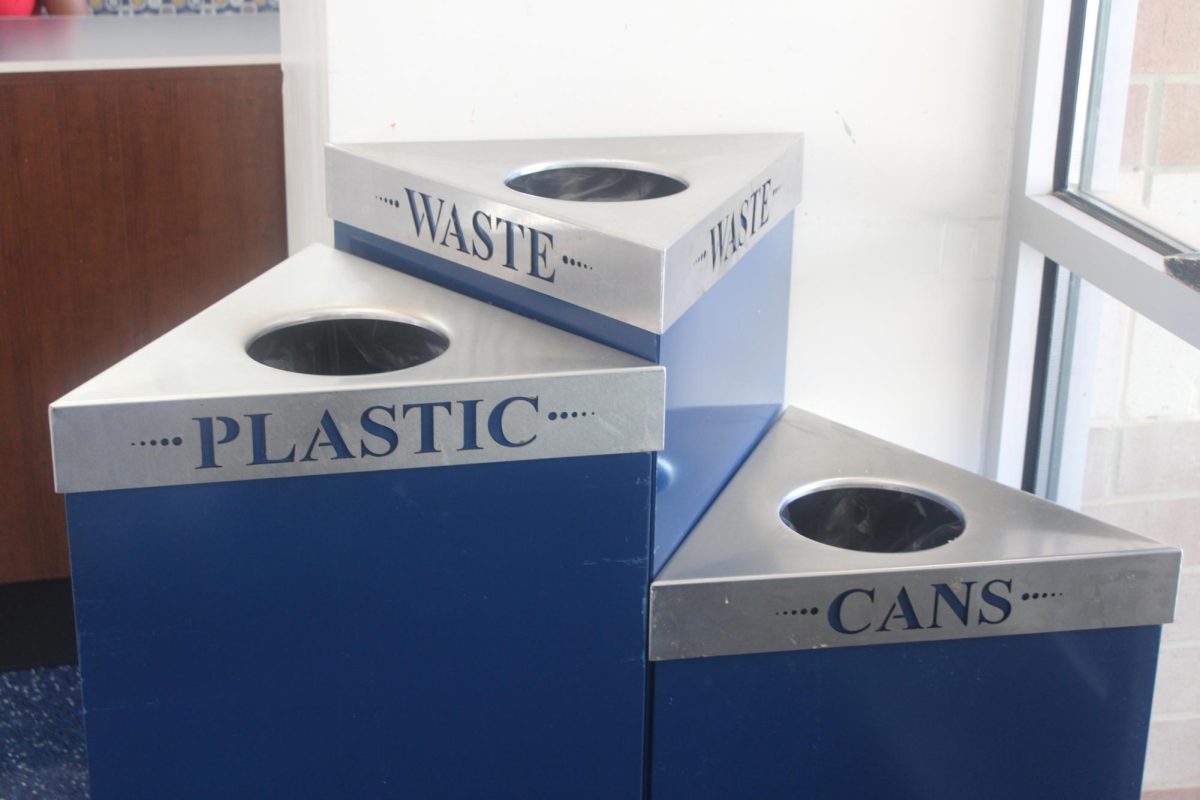
“We do recycle when we can. We also have a compost bin to recycle organic materials that will eventually become soil that is high in nutrients, which is amazing for plants! I definitely think people should recycle; it helps the environment tremendously. All it takes is the tiny extra step of putting the trash, plastics and compostable materials in their correct bins,” Sturm said.
Reducing food waste through meal planning, composting and donating to food banks is a significant way to preserve the environment and help out communities.