

With the inflated use of artificial intelligence, commonly known as AI, worries of its effects on the environment have risen as well. Big companies that have incorporated AI into their platforms, including Google’s Gemini, Meta AI, ChatGPT and Snapchat’s “My AI,” are now trying to fund their creations as well as find the resources to keep them working. Though some intellectuals are curious to see AI’s impact on education and the future of schooling, environmentalists are trying to see how sustainable these AI data centers are going to be on the already-worsening environment.
Alex Orehowski (12) believes if AI data centers were more environmentally friendly, then AI would be a great tool to use.
“AI data centers aren’t worth all it takes to have AI in the way they are being built now. I feel like there could be more sustainable ways to run them. If they were more efficient, safer ways to run them, then they’d totally be worth it because AI is very useful,” Orehowski said. “I’m not against nor with its expansion because I don’t think it’s a bad thing in idea, but the way it’s being handled is just destructive.”
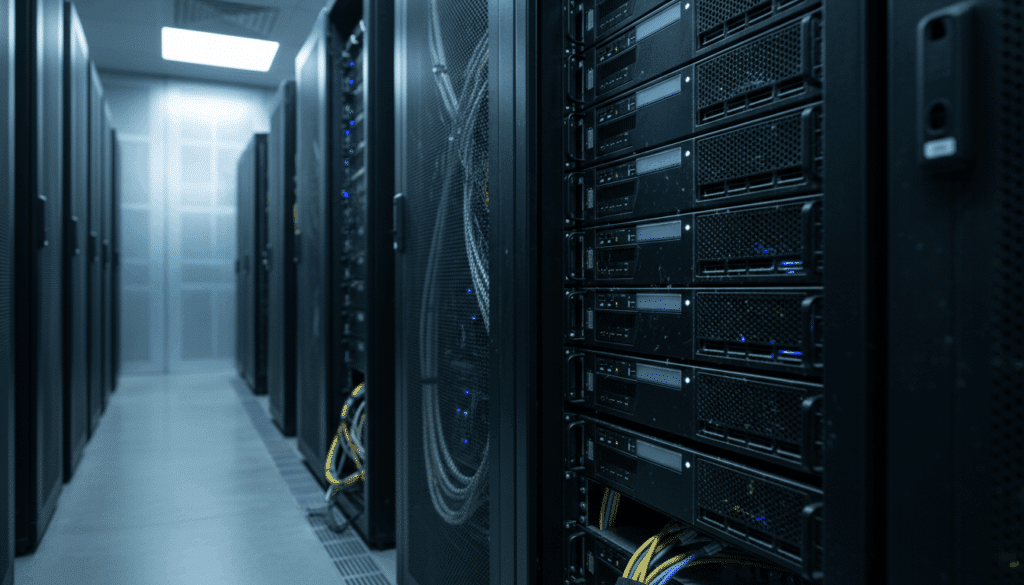
According to ibm.com, AI data centers are facilities that house specific IT infrastructure needed to deliver AI applications and services. The problem that is concerning is how much water these AI data centers need to cool off; the data centers require 10 times the electricity needed, compared to a traditional data center used for the internet. The increased demand in energy not only leads to an increase in carbon dioxide emissions but will also drain ecosystems of their water. According to eesi.org, large AI data centers can consume up to 5 million gallons of water each day. With this in mind, only about 0.5 percent of Earth’s water is accessible and safe for human consumption. The pressures for water for the future of the human species are what drives citizens to fight against AI and AI datacenters.
The good news is environmentalists and scientists are finding new ways to recycle and reduce the amount of water needed to cool the datacenters. The new methods include closed-loop cooling systems, where the water is used multiple times, air cooling, air conditioning for the machines or immersion cooling, which uses synthetic fluids to cool the hardware. According to interestingengineering.com, Cambridge University researchers have also found a way to reuse hydrogen to allow machines to reuse power without the admissions of greenhouse gases. Bringing this technology on a bigger scale will reshape how AI can be powered, as well as other environmentally harming machinery.
An example of the problems that AI data centers can create for individuals was presented in an article from bbc.com. Beverly and Jeff Morris live only 400 yards away from a freshly built data center owned by Meta. Their lives have been turned from a cozy oasis in rural Georgia to a chaotic nightmare once the construction of this center was complete. Mrs. Morris told bbc.com that she has continuous concerns about their water supply.
“I can’t live in my home with half of my home functioning and no water. I can’t drink the water. I’m afraid to drink the water, but I still cook with it and brush my teeth with it. Am I worried about it? Yes,” Morris said.
While the fight to protect water is a hot topic currently, the fight to protect land and living quality is just as important. In recent years, the growth of urbanization and home building has become more relevant with population growth and the impacts of deforestation. According to lincolninst.edu, larger data centers being built cover hundreds of acres with steel, concrete and paved surfaces. The data centers are known for their bland, bulky look and often take away from the nature surrounding them. While some data centers are being built on land that is no longer suitable for farming, nature or housing, environmentalists are fighting to revive said lands for more sustainable living. The construction of the AI data centers eliminates that possibility.
Jeremy Pruett, a biology teacher at Spartanburg High School, encourages new regulation for AI data centers so the environment is better protected.
“Increased energy costs in areas where data centers are added can disproportionately affect rural or lower income families. And if this energy is generated using nonrenewable, ‘dirty’ fuels like coal, the environment’s homeostasis is lost due to increased carbon emissions. Regulations and guidelines must be in place to compel AI companies to research environmental effects,” Pruett said.
Driving by the data centers is one thing, living near one is another. The continuous hum from the machinery and water use concern residents on their quality of life. In certain cases, the water supply used to power the data centers is the same supply for the housing. If most of the water is going to the data centers, the amount water needed for a family cannot being fulfilled. On top of finding a way to fund having a family, future parents might now struggle to find a home to raise their family without the impacts of AI in their way.
Even while AI and the knowledge of its impact are growing, starting environmentally friendly habits can help in the local community. Reducing the amount of water used daily, growing a home garden or making sure to turn off lights when leaving a room are little ways to keep the earth and ecosystems happy.