

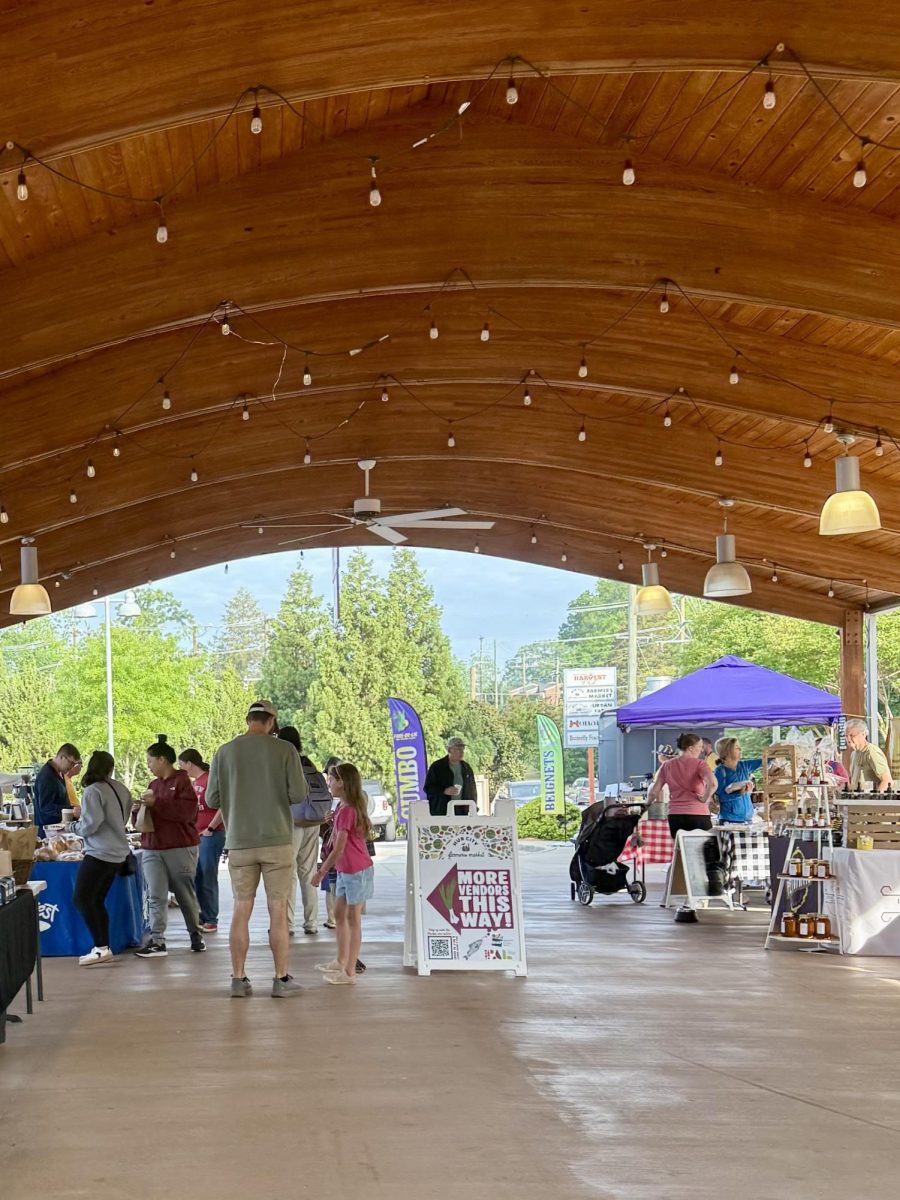
As spring arrives in Spartanburg, South Carolina, the Hub City Farmers Market begins its regular season with fresh produce from local vendors and continues to draw in folks from across the county. Located at 498 Howard St., the market runs every Saturday from 8 a.m. to noon from April through November and has become a weekly gathering place for people looking for farm-fresh food and a sense of community.
Finley Sloan (12) is one of many students who stop by the Hub City Farmers Market to browse vendors and grab breakfast, appreciating the market’s focus on locally grown food and community.
“Nothing tastes better than knowing the food you are consuming is local, fresh and helping local businesses. I think it keeps us in connection to being a community and sharing hard work for others’ enjoyment,” Sloan said.
The Hub City Farmers Market is a producer-only market, which means that every item sold is either grown or made by the person behind the booth. More than 30 vendors participate throughout the season, offering everything from seasonal fruits and vegetables to pasture raised meats, eggs, dairy, honey, sourdough bread and handmade goods such as pottery, jewelry, soaps and fresh flowers. Food trucks, live music and children’s activities add to the atmosphere, making the market a weekend hangout spot as much as a shopping destination.
Joey Lesley (11) thinks the market feels different from a typical weekend errand.
“It feels like an actual ‘thing’ to do instead of just a chore. Plus, it’s a good excuse to get outside, maybe find some cool local snacks and just hang out with friends,” Lesley said.
During the colder winter months, the market shifts indoors to RJ Rockers Brewing Co. downtown, and throughout the year it occasionally hosts Sunday pop‑up markets on Morgan Square. These events give students and families more chances to shop local without leaving the downtown area.

The market also includes a Youth Booth, giving student entrepreneurs a space to showcase their work. On April 25, the vendor was Alexis Brown (11), whose business, LexFit Jewelry, features pieces she designs herself in soft, feminine styles. Brown, along with her mom and brother, Eason Brown (9), spent the morning greeting customers and talking about her creative process. The Youth Booth adds another layer to the market’s community feel by highlighting student talent and small‑business skills.
Although she hasn’t visited the Hub City Farmers Market yet, Eliza Martin (9) said she sees its value for the community.
“I think local markets appeal to students because they feel more personal than regular stores, and you can actually see where things come from,” Martin said. “I also think access to fresh, local food is really important for a community because it encourages eating healthier foods.”
Behind the scenes, the market is part of a larger system working to strengthen Spartanburg’s local food network. The Hub City Farmers Market is part of PAL: Play. Advocate. Live Well., a nonprofit that focuses on active living and building a healthy local food system. PAL supports several programs that work together to increase access to organic, regional food. One of the most important pieces of this system is the PAL Food Hub.
The PAL Food Hub serves as a central distribution center for garden-fresh food. Farmers bring their produce to the hub, where it is stored, organized and prepared for distribution. The Food Hub supplies community partners, schools, organizations and markets with direct-from-farm produce.
This system helps small farmers reach more customers than they could on their own. It also makes it easier for institutions to buy local food in larger quantities. For Spartanburg residents, the Food Hub increases the amount of homegrown produce available in neighborhoods, school cafeterias and community programs.
Jenni Callahan, the farmers market manager, described the market’s purpose as rooted in expanding access to fresh, local options for the community.
“Hub City Farmers Market’s most important role in Spartanburg is to create access to local, healthy food,” Callahan said. “I wish that people understood is how much better and fresher local products taste compared to items that have been sitting on a shelf or in a cooler at the grocery store’s warehouse.”
The organization also operates an urban farm that grows seasonal produce and offers educational programs such as Seed to Table. These programs teach students and community members how food is grown and how it moves from the soil to the plate. The urban farm works closely with the Food Hub and the Saturday market to create a connected local food network.
CJ Billings (10) emphasized that supporting local businesses strengthens not only the economy but also the community.
“Supporting local farmers and small businesses matters dramatically because it boosts the local economy whether the city is big or small. When you spend money at a local business, a great portion is reinvested locally, supporting the local economy,” Billings said. “Small businesses and farmers’ markets foster connections between neighbors, boosting community resilience, and preserving local character.”

As part of the Hub City Farmers Market, the Mobile Market extends this access even further. The mobile unit travels to rural areas and neighborhoods where grocery options are limited. Operating Monday through Friday after its season begins in April, it usually features approximately 18 weekly stops across the county. It brings fresh produce directly to residents who may not be able to visit the Saturday market.
Ingrid Schoeni (11) highlighted the importance of the market’s role in providing students with fresh produce that supports their physical and mental well‑being.
“It’s important for everyone to have access to fresh produce, as it’s linked to not only health-based factors such as weight management and getting important vitamins, but also overall well-being,” Schoeni said. “Fueling your body with nutrient-rich, tasty foods can make you feel better physically and mentally, and that’s why it’s important to have access to fresh food daily.”
For students looking to get involved, the market offers opportunities to volunteer throughout the season. Volunteers get to help set up tents, greet customers, support kids activities and assist with special events.
Aiden Smith-Burnett (12) said she would be interested in getting more involved with the market through volunteering.
“I would consider volunteering at the market; I think it would great real-world experience and give good insight into the makings of a small business,” Smith-Burnett said.
As spring crops like lettuce, spinach, carrots and peas come into season, the market is expected to grow busier each week. The Hub City Farmers Market, with its local vendors, live music and mission centered on health and community, remains one of Spartanburg’s unique weekend spots and a place where students can see how local food, nonprofits and neighborhoods connect.