

Over the past century, the film industry has transformed into a home for creative masterminds. Film holds a special place in many people’s hearts. It’s a medium where one can both express themself without end but also explore perspectives that they never knew before.
Technology has evolved over the years, though, and recently, Artificial Intelligence, commonly known as AI, has weaved its way into the film industry.
AI is a type of technology that allows computers and machines to learn, process and reason with information that it gains. This means that AI can learn and give solutions, ideas and concepts to users when prompted. It also can act independently on tasks or autonomous projects.
Only recently has it been toyed with in the film industry, but immediately when the concept of arose, many directors, actors and movie-lovers were outraged.
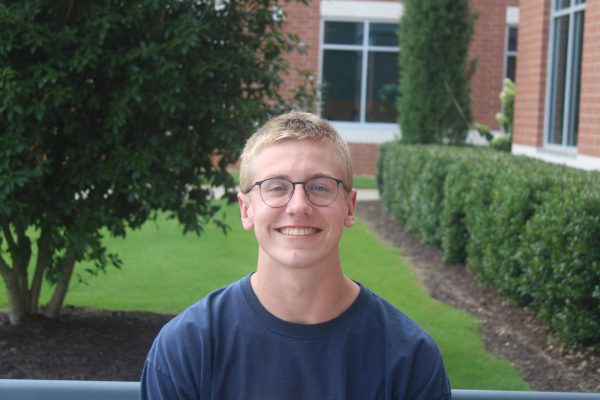
Jason Cline (10) appreciates movies for what they are and doesn’t agree with AI being implemented into them.
“AI should not be allowed in any of the arts whatsoever,” Cline said. “It is disrespectful to all the people who have put so much time and effort into what they do just for someone to make a cheap imitation of it in seconds.”
Many believe that AI would simply take over the film industry and the production and writing processes that are a part of it. There is fear that directors, actors and writers will lose their jobs and their roles in the industry will be replaced by AI machines. A foggy future where entire scripts and castings are strictly developed and laid out by AI terrifies some.
Concerns over AI became visible during the 2023 actor strikes. Many actors were upset that their images and digital likeness could be pirated and used without their consent by studios and other production companies. This also relates to the constant debate in the AI world surrounding authorship and ownership rights of AI creations.
In 2025, one of the first fully AI actresses appeared in the industry. Created by Eline van der Velden, the actress’s name is Tilly Norwood. She has only appeared in certain short-film projects, AI clips and social media content, but the creation of her has caused major commotion in the community. Many critics and actors have shown strong disapproval of the AI actor, saying that she’s a threat to jobs and the film industry as a whole.
Van der Velden simply wanted to spark new conversations about AI in the film industry, though, and in an interview with the Guardian, noted some of the benefits of AI acting, such as the reduction of fame.
“[Regarding AI experimentation] You’re trying to provoke thoughts and discussion,” Van der Velden said. “[Human actors] don’t have to be a known name. For example, Tilly is famous. I’m not. That’s wonderful. Fame is a horrible thing.”
To Eline van der Velden, Tilly Norwood was a concept that was aimed to promote discussion about the potential that AI has in the film industry. She made the point that it would take away some of the negatives of fame for actors. Human actors could control avatar movements and motions without having to bear the weight of fame and Hollywood.
AI has also been viewed in a positive manner for applications in the behind-the-scenes work of filmmaking. Processes like script and video editing could be easily performed with AI, or even the analytics and distribution processes could be assisted by AI. The 2024 film, “The Brutalist,” even utilized AI in a small way to alter the speech of actors, creating a more natural and fitting Hungarian dialect.
The everlasting problem with AI, though, is the blurry line between assistive use and creative takeover.
Carsyn Smith (12) paints the picture of the originality and authenticity that comes with film and how AI threatens it.
“Art is one of the only things left in our world that isn’t fully automated, and much of the importance of art comes from the stories told by those who create it. Using AI undermines that completely,” Smith said.
All in all, it is most important that film and cinema keep their imaginative, ingenious storytelling and appeal. AI, without a doubt, will be a part of the industry in the future, but ethical boundaries will need to be drawn to ensure that the magic never dies.