

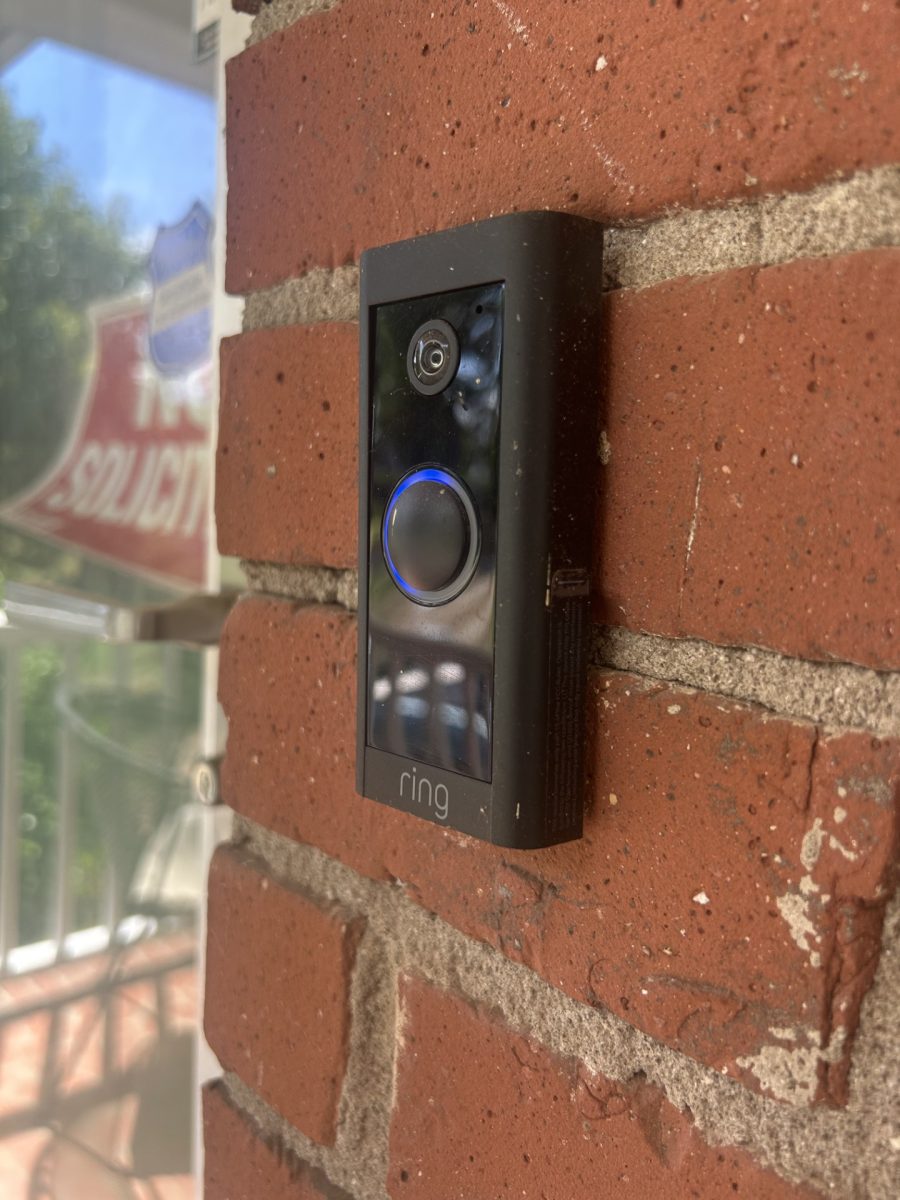
Having cameras around one’s home can bring comfort and help prevent any unwanted persons from wondering the property; but what if these cameras were actually invading privacy rather than protecting it? With new artificial intelligence, AI, and internet connected features on home security cameras, many homeowners are now concerned about exactly how much information their cameras are collecting, and if the companies behind the cameras can be trusted.
Kerrick Wilkins (11) likes the safety his doorbell camera brings.
“My doorbell camera makes me feel safe because I get to see if anything or anyone is around my household. In my opinion, I think home security hasn’t even been close to being overboard especially from the lives that were saved because of it,” Wilkins said.
Home security has flourished in the past several decades, with companies including Ring, SimpliSafe and ADT making home security accessible for millions of homeowners. These companies strive to protect homes and carry features to make protecting homes easy. However, these same features can be very invasive.
Jeremy Eaton, owner of Upstate Audio Video, sets up cameras for homeowners around Spartanburg and warns customers how easily video footage can be accessed.
“Video monitoring can be a good thing in keeping you safe, but it is also important to note that everything can be made public, even if you don’t want it to be. You always need to be aware that if you have any type of recording device inside or outside of your home, it is possible for someone to remotely access that data because anything network-based can be easily accessible,” Eaton said.
According to globalts.com, doorbell cameras often have a “Familiar Faces” AI program to scan and store unique facial profiles, in an attempt to quickly identify known and unknown personal. One doorbell camera company, Ring, also created “Neighbors,” an app where Ring users can share their footage or send a message of concern with each other. The program is designed to help neighbors connect their cameras to look for missing pets, potentially dangerous people or even natural disasters like wildfires.
While the programs were made with good intention, allowing the company to use the homeowner’s data can rub many the wrong way. Many of these systems are internet or network powered as well. Through the internet, data and camera footage is more vulnerable, as hackers can access the data quickly, according to security.org.
Eaton continues to explain how police can find personal camera footage helpful for solving crimes.
“Doorbell cameras and other video monitoring systems on homes and throughout neighborhoods can be very helpful in assisting authorities as they try to solve crimes. Our company has often consulted with local police departments to gather information from private properties where we have cameras installed to help find suspects that would in other instances might not be located. However, the data belongs to the individual, so they should still have rights to their information,” Eaton said.
The whole point for home security is to prevent unwanted crime in or around one’s home. Camera data can be used as evidence against suspects during trials, whether minor crimes or major incidences. Police can also gain a search warrant to search camera data from homes to benefit an investigation; these types of warrants do not need the homeowner’s permission to receive the data.
Because of how beneficial home surveillance evidence has been to police, as many as 2,000 police departments have collaborated with companies like Ring for investigations, according to wbur.org. Keeping families safe is the ultimate goal for both the police and security companies.
Karla Lino (12) believes home surveillance can be very beneficial for solving crimes.
“I do think home security data should be used to solve crimes because having data about the most common time criminals commit their crimes or how they commit their crimes might help solve more cases,” Lino said.
As with many types of technology, there is often positives mixed along with negatives. Provided that homeowners understand any risks that come along with doorbell cameras, they can often be a good thing.