

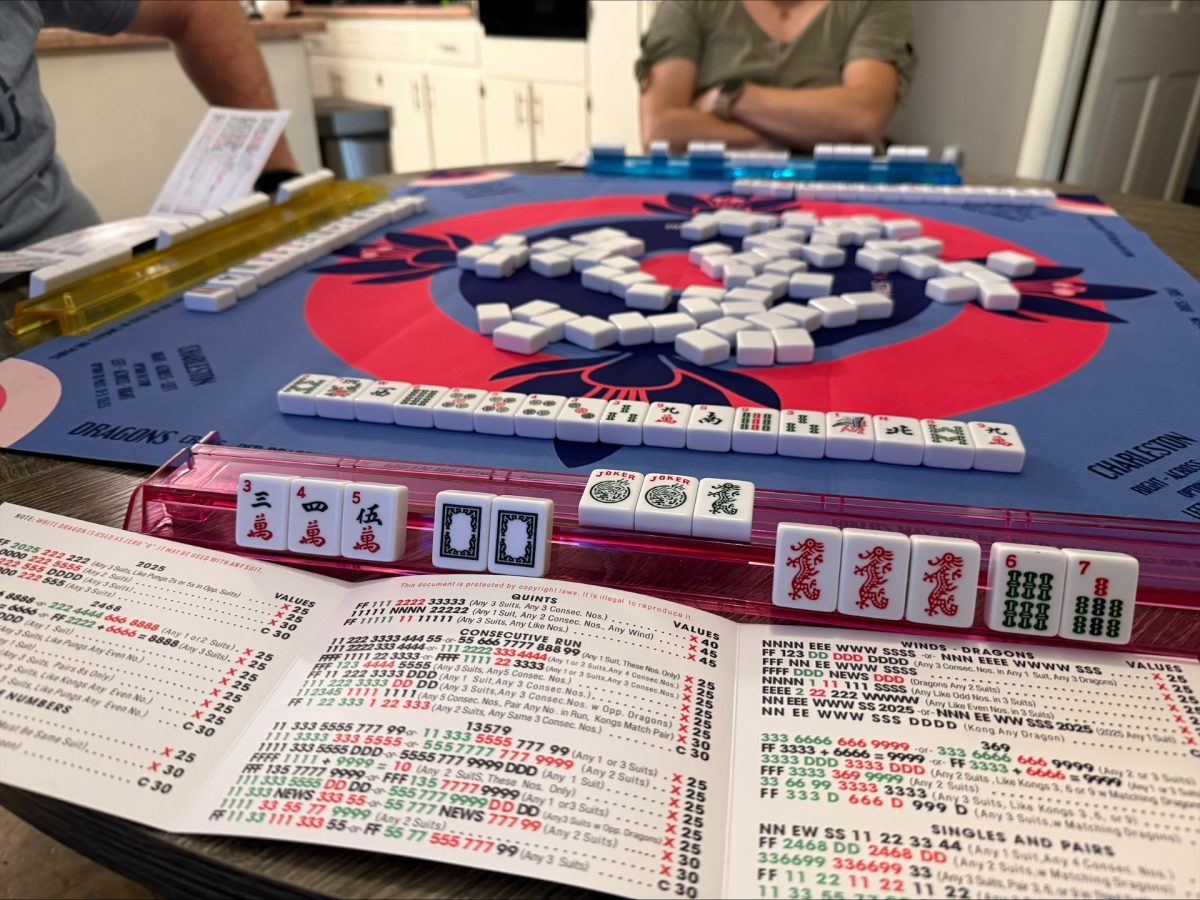
Mahjong is a four player, tile-based strategy game that faced a resurgence of popularity in the South around 2024 and is trending across social media platforms including TikTok, Instagram and Facebook today. TikTok is the major hub for fans of Mahjong and the “Mahjong tile” trend, where content creators post videos of games and add their own fun, creative twists to the game.
Mahjong was officially developed in the mid-19th century during the Qing Dynasty in Eastern China and was said to be evolved from a much older Chinese card game, Madiao. Most historians claim it was popular among wealthy merchants and elite upper classes in urban centers that depended on trade and international exchange. The game quickly gained global popularity in the 1920s and was primarily fueled by gambling, social clubs and media coverage.
Kelli Foster is a United States History teacher at Spartanburg High School who was first introduced to Mahjong at her friend’s baby shower.
“The experience was interesting. The game seems really complicated but everyone playing at the tables around me had played before and they were very familiar with the rules, as some of the ladies had even taken a class at the YMCA that taught them the basics of the game,” Foster said. “They definitely seemed to enjoy playing and at times were really competitive. I think they enjoy the game because it’s challenging but also gives them a chance to socialize while playing.”
The game’s name, Mahjong, roughly translates to “sparrow’s game,” which likely originated from the sounds of tiles being shuffled and from the quick and lively pace of the game. Joseph P. Babcock was an American representative of the Standard Oil Company and was sent to the Eastern Chinese Port of Suzhou to advocate their business. He is credited for coining the term “Mah-Jongg,” the American interpretation of the game, and bringing to the West after World War I.
Oh My Mahjong, Bam! Let’s Mahjong and The Mahjong Line are three examples of companies that have sold Mahjong sets nationwide. Megan Trottier is the founder and CEO of Oh My Mahjong, and she shares how and why she loves the game.
“Mahjong is having a real moment, and it makes sense. People are craving more face-to-face, screen-free ways to spend time together, especially ones that feel a little more intentional than just grabbing a drink,” Trottier said in readersdigest.com. “Mahjong naturally lends itself to that. It’s tactile, communal and has a built-in sense of ritual, which makes it feel like a whole experience rather than just a game.”
To play in America, one would need a set of 152 tiles, four racks with pushers, two dice and four current National Mah Jongg League Cards. The cards contain a list of combinations underneath a specific category, such as odds, evens, consecutives and so many other unique groupings, and they are typically updated to accommodate the year. The goal of the game is to replace and rearrange tiles in order to complete a specific combination. The tiles contain three main suits, “Bams,” Cracks” and “Dots,” as well as additional tiles such as cardinal directions (North, East, South, West), dragons, flowers and seasons.
Mahjong has also made a comeback through digital platforms. These games include different styles and rules, and many are either traditional, modern or are influenced by other cultures.
Martha Barre (12) enjoys playing Mahjong and finds it a fun way to spend time with her friends and family.
“I love Mahjong. I started playing with my mom a few years ago and now get to play with all of my friends as the game has grown in popularity. It is a super fun game that really makes you think. I enjoy all of the different strategies and options you can choose from to play,” Barre said.